鲜花( 21)  鸡蛋( 0)
|

楼主 |
发表于 2010-10-5 20:41
|
显示全部楼层
正好刚看到一个类似的问题在别的英文论坛:
& u5 L/ S! W( A6 F p5 B" w" b; o A* [8 R% u7 m' x! K; t
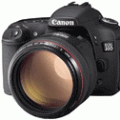
F4 IS Vs. F2.8 non IS, 贴过来大家都评论评论。
S2 [+ e: _4 I" s6 Q$ x( D+ m, d1 h+ e" I* d& `* S# l" w# E) P* ?
**********************************
) |, w3 y t% a$ ?$ Q; eAnyhow, you pose a good question - f/4 IS or f/2.8 non IS. Here are the main points:+ ?; E4 E4 v* b- u) n1 A( W+ M/ q
, p: [+ K1 c7 Z; z3 c" `+ o4 E8 S1) The f/2.8 gives you one extra stop of hand-holding possibility, but at the cost of depth of field, whereas the 4.0 gives you 3 stops of hand-holding possibility at any aperture. Winner: f/4.
) u1 E$ T, c- m T0 h/ [0 o; @1 x+ p0 {
2) The f/2.8 gives you one extra stop of light in darkened conditions when photographing moving subjects. The f/4 doesn't. Winner: f/2.8.
8 Y. g# P. t) |0 t
* b6 t& Y' }0 F7 }3 J& Q3) The f/4 is lighter and smaller. Winner f/4.) p9 G) G% s3 }4 Q1 M8 ~+ A
! Q- ?2 r# S! \/ B4 I. Q: u3 z5 R4) The wider aperture of the f/2.8 can offer more creative possibilities, especially when taking portraits. Winner: f/2.8.
% q0 P: t# ?' M6 E* H+ F9 F" v4 b
% o) l) @' |$ f. K K0 Z* k5) The f/2.8 has better bokeh (creaminess of the blurred areas). Winner: f/2.8. |
|



























 狗仔卡
狗仔卡
 发表于 2010-10-5 19:18

 提升卡
提升卡 置顶卡
置顶卡 沉默卡
沉默卡 喧嚣卡
喧嚣卡 变色卡
变色卡 显身卡
显身卡
 发表于 2010-10-5 19:41




 发表于 2010-10-5 20:41


 大眼睛是典型的慢镜头,用这个抓拍运动题材的片子,亏你想得出来 ~



 光圈大嘛,呵呵